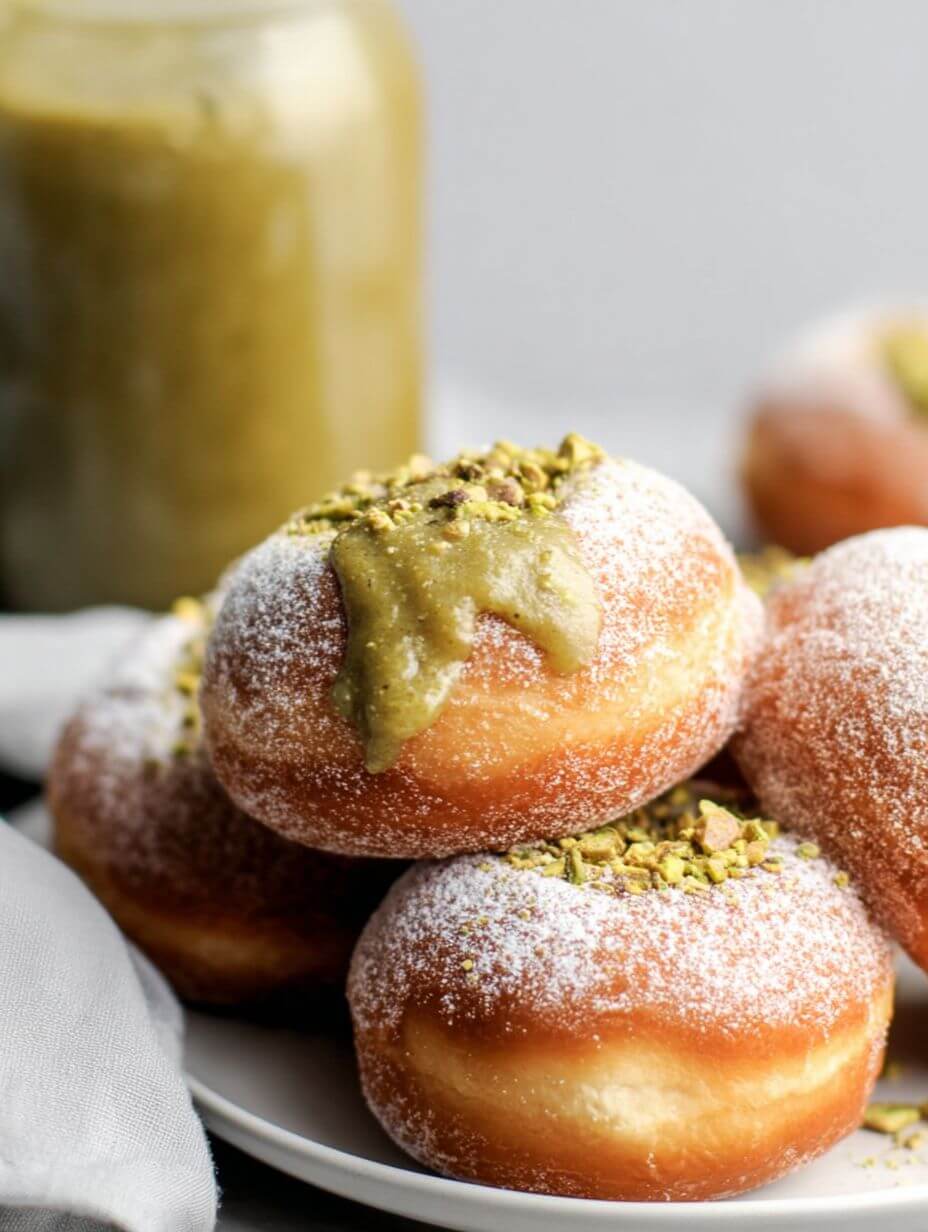
Pistachio Cream Donuts
Pistachio Cream Donuts (Soft, Fragrant, and Honestly Hard to Stop Eating)
There’s something about homemade donuts that feels a little ambitious… until you actually make them.
And then you realize—oh, this is doable. A little messy, sure. But doable.
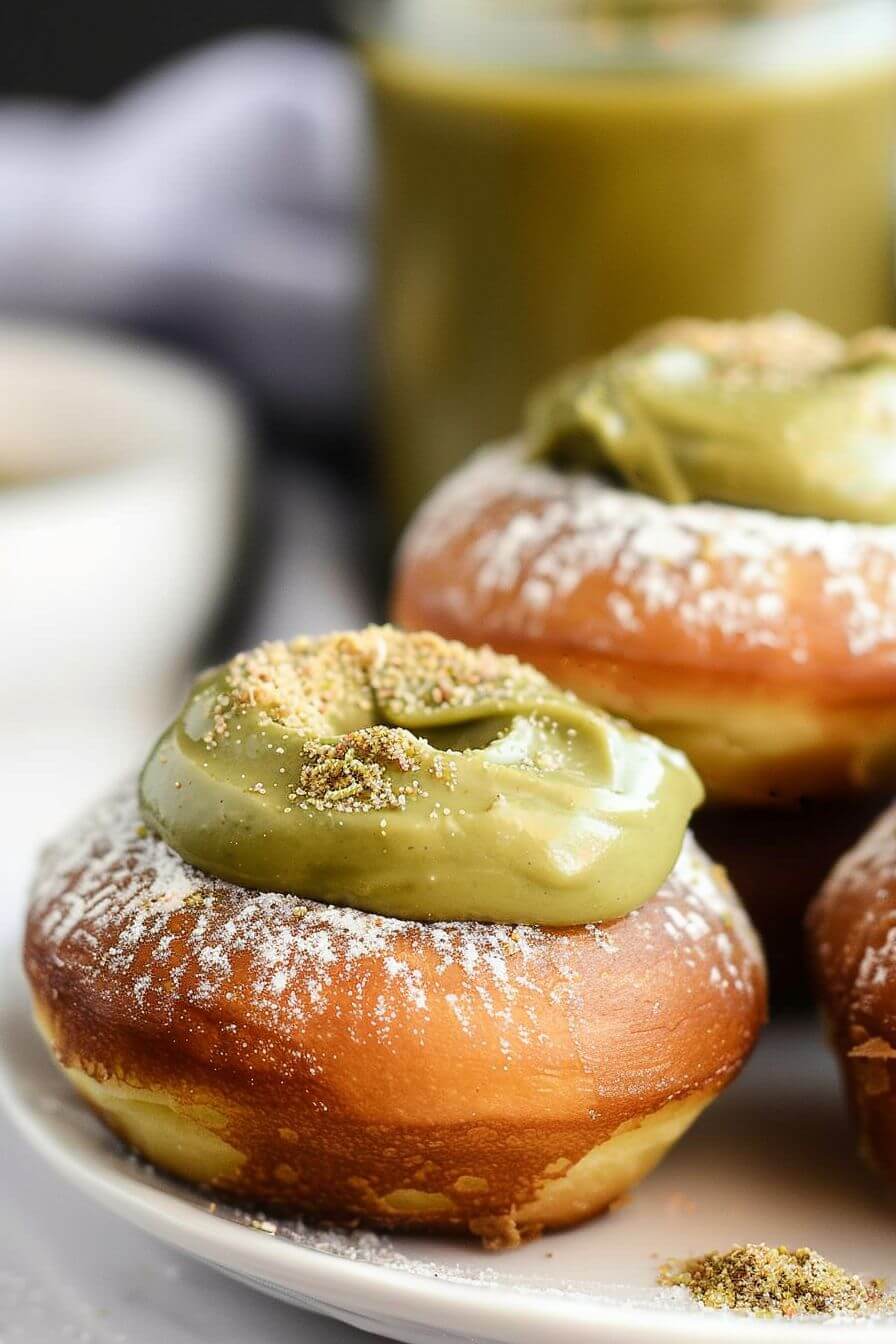
These pistachio cream donuts are the kind that feel like they came from a specialty bakery. Light, fluffy dough, fried just until golden, rolled in citrusy sugar, and filled with smooth pistachio cream that’s rich without being too sweet.
They’re indulgent, yes. But also surprisingly balanced.
And if you’re making them during the holidays or for a weekend treat, they have that “everyone gathers in the kitchen” kind of energy.
Why These Donuts Work (Even If Yeast Sounds Intimidating)
Let’s address the elephant in the room—yeast.
It sounds technical. It sounds like something that can go wrong.
But here’s the thing: this dough is forgiving.
If your milk is warm (not hot), and you give it time to rise, you’re already most of the way there.
What makes these donuts stand out is the texture. They’re soft and airy thanks to the enriched dough (hello butter and eggs), but still structured enough to hold that creamy pistachio filling.
And the citrus sugar? That little detail wakes everything up.
Ingredients (With a Few Helpful Notes)
- ¾ cup warm milk
- 1 packet active dry yeast
- 3 tablespoons sugar (divided)
- 3 ¼ cups flour
- 1 teaspoon salt
- 2 eggs (room temp)
- ½ cup butter, softened
- Oil for frying
- ¾ cup sugar (for coating)
- 1 tablespoon orange zest (optional but highly recommended)
- ¾ cup pistachio paste
A few real-life tips before you start:
Milk temperature matters
Think warm bath water—not hot. Too hot can kill the yeast.
Pistachio paste quality makes a difference
If you can, go for a good one like Pisti or Pistakio. The flavor is smoother and more pronounced.
Bread flour vs all-purpose
Either works, but bread flour gives a slightly chewier, more structured donut.
Step-by-Step (Let’s Take It One Stage at a Time)
Start by activating your yeast. Mix it with warm milk and a bit of sugar, then let it sit until foamy. This is your signal that everything is alive and ready.
In your mixer, combine flour, salt, eggs, butter, and the remaining sugar. Add the yeast mixture and mix until a soft dough forms.
Now comes the kneading.
Let the mixer run for about 10–15 minutes. It sounds long, but this is what builds that soft, stretchy texture. You’re looking for dough that’s smooth and elastic.
If you stretch a small piece and it lets light pass through without tearing, you’re there.
First Rise (The Quiet Waiting Part)
Transfer the dough to a greased bowl, cover it, and let it rise until doubled—about 60–90 minutes.
This is a good moment to step away. Clean up, check on other things, or just take a breather.
Once it’s risen, gently punch it down. Not aggressively—just enough to release the air.
Shaping the Donuts (It’s Easier Than It Sounds)
Roll the dough to about ½-inch thickness.
Cut into rounds using a cutter or even a glass if that’s what you have.
Place each round on parchment squares. This makes transferring them to oil much easier later.
Cover and let them rise again for about 30 minutes. They should look slightly puffed and soft.
Frying (The Part Everyone Worries About—But You’ll Be Fine)
Heat your oil to 350–355°F.
If you don’t have a thermometer, test with a small piece of dough—it should sizzle gently, not aggressively.
Carefully place donuts into the oil, a few at a time. They only need about 60–90 seconds per side.
You’re looking for a light golden color—not too dark.
Keep an eye on your oil temperature. If it drops too much, the donuts absorb oil. Too hot, and they brown too quickly.
Citrus Sugar Coating (A Small Detail That Changes Everything)
Mix sugar with orange zest and rub it together with your fingers.
This releases the oils in the zest and makes the sugar incredibly fragrant.
Roll the warm donuts in this mixture right after frying.
That scent? It’s bright, slightly sweet, and just makes the whole donut feel more special.
Filling with Pistachio Cream (The Best Part)
Once the donuts have cooled, use the handle of a spoon (or a small knife) to create a pocket inside each one.
Pipe in the pistachio paste until filled.
Don’t overfill—but also don’t be shy. You want that creamy center in every bite.
Make-Ahead & Storage (Short Window, But Worth It)
These are best the day they’re made. That’s when the texture is at its peak.
If needed:
- Store at room temperature for up to a day
- Refrigerate for slightly longer, but bring back to room temp before serving
You can also prepare the dough ahead and refrigerate it overnight for the first rise.
A Quick Reality Check (Because Homemade Donuts Aren’t Perfect)
Some might be slightly uneven.
Some might be a little darker than others.
One might leak filling.
That’s normal.
And honestly? It’s part of the charm.
Conclusion
These pistachio cream donuts bring together soft, airy texture and rich, nutty flavor in a way that feels both indulgent and thoughtful. They take a bit more time than everyday baking, but the process is straightforward and the result is absolutely worth it.
From the citrus sugar coating to the creamy pistachio center, every detail adds something special without making things complicated. Once you’ve made them, they stop feeling intimidating and start feeling like a treat you can recreate whenever the craving hits.
And when a batch of warm donuts is sitting on your counter, it doesn’t take long for them to disappear—which is usually the best sign of all.
Pistachio Cream Donuts
Ingredients
Method
- Activate yeast by mixing warm milk, yeast, and 1 tablespoon sugar. Let sit until foamy.
- Combine flour, salt, eggs, butter, remaining sugar, and yeast mixture. Knead until smooth and elastic.
- Let dough rise until doubled, about 60–90 minutes.
- Roll dough and cut into rounds. Let rise again for 30 minutes.
- Heat oil to 350°F and prepare sugar coating with zest.
- Fry donuts until golden, about 60–90 seconds per side.
- Coat warm donuts in sugar and cool completely.
- Fill with pistachio paste using a piping bag and serve.
Notes