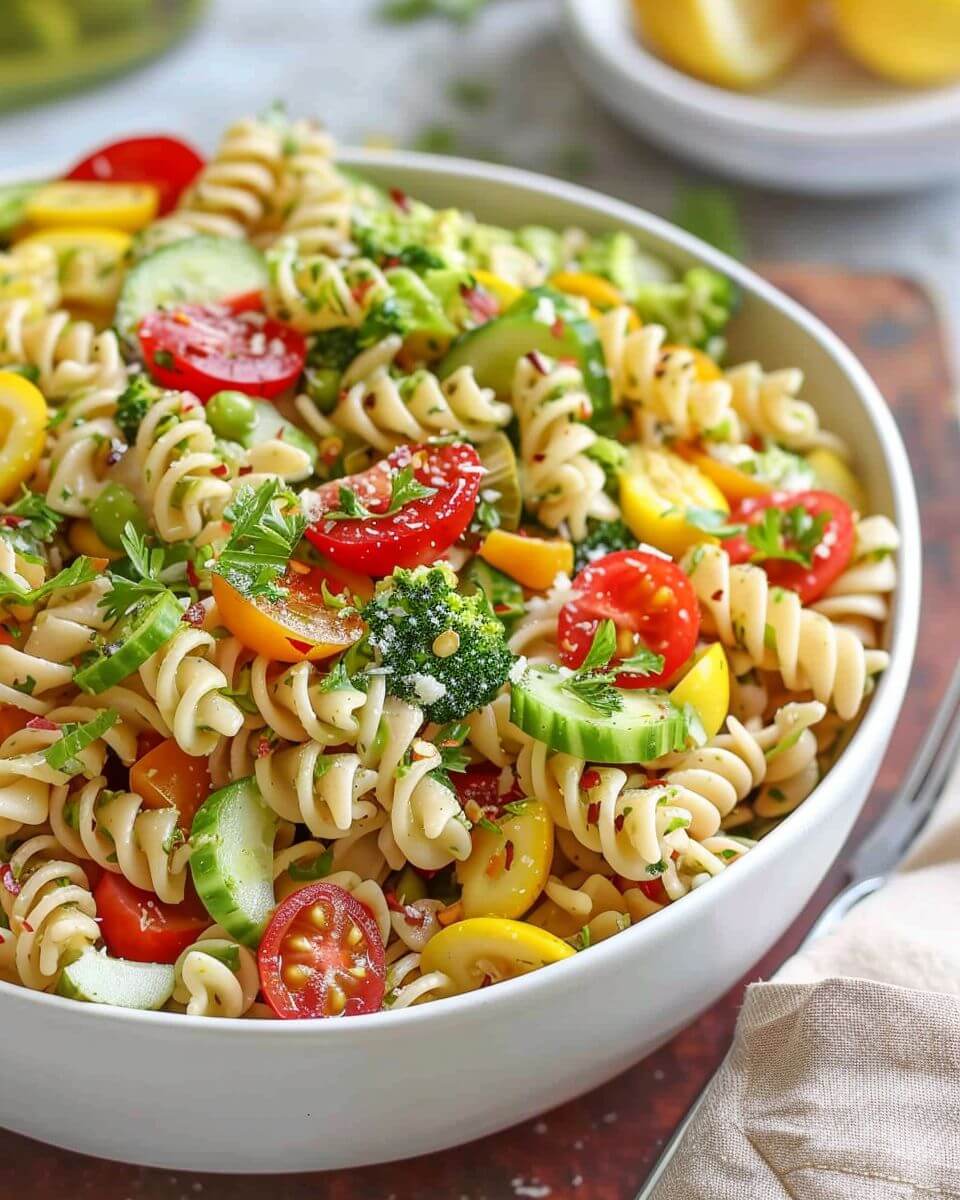
Primavera Pasta Salad
Primavera Pasta Salad (Fresh, Colorful, and Surprisingly Satisfying)
There’s a certain kind of recipe that quietly solves a lot of problems.
You need something quick. Something that works for lunch and dinner. Something that uses what you already have in the fridge. And ideally… something your kids won’t push around the plate.
This Primavera Pasta Salad checks all of those boxes.
It’s fresh, colorful, and packed with crisp vegetables, but still filling enough to feel like a real meal. It’s light—but not boring. Simple—but not plain. And it holds up beautifully in the fridge, which makes it one of those recipes you end up relying on more than you expected.
Honestly, it’s the kind of dish that starts as a side and slowly becomes the main event.
Why This Recipe Works (Even on Busy Weeks)
Let’s be real—pasta salad can go wrong fast.
Too dry. Too heavy. Too much dressing. Not enough flavor.
This version avoids all of that by focusing on balance.
You get:
- Tender pasta as the base
- Crisp vegetables for texture
- A light, zesty dressing that coats without drowning
- Enough flexibility to adjust based on what you have
It’s not trying to be complicated—it’s just trying to be good. And that’s exactly why it works.
Ingredients (Flexible and Family-Friendly)
Base:
- 12 oz short pasta (rotini, penne, or bowtie)
Vegetables:
- 1 cup cherry tomatoes, halved
- 1 cup cucumber, diced
- 1 cup bell peppers, chopped
- ½ cup red onion, finely diced
- 1 cup steamed broccoli or zucchini slices
Extras:
- ½ cup shredded or cubed mozzarella
- ¼ cup grated parmesan
Dressing:
- ⅓ cup olive oil
- 2 tablespoons lemon juice or red wine vinegar
- 1 teaspoon Dijon mustard
- 1 teaspoon Italian seasoning
- Salt and pepper to taste
Optional:
- Fresh basil or parsley
- Olives or artichokes for extra flavor
A few helpful notes before you start:
Use short pasta shapes
They hold the dressing better and are easier to eat.
Mix textures intentionally
Crunchy, soft, and juicy elements make each bite more interesting.
Don’t overdress
You can always add more later—but you can’t take it out.
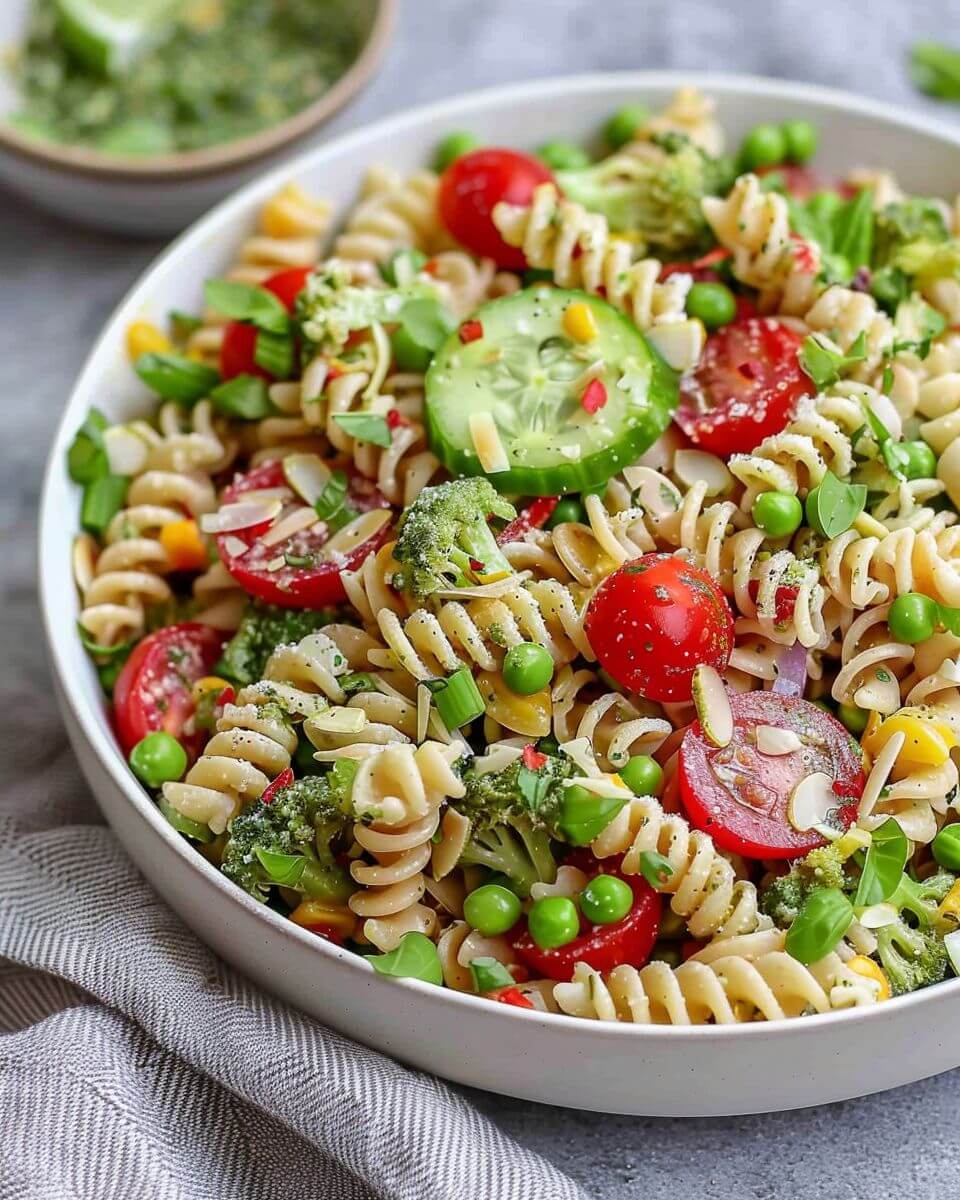
Step-by-Step (Quick and Straightforward)
Start by cooking your pasta according to package directions.
Salt the water well—it’s your first layer of flavor.
Once cooked, drain and rinse briefly under cool water to stop the cooking process.
Let it cool completely.
Prep the Vegetables (Keep It Simple)
While the pasta cools, chop your vegetables.
You don’t need perfect knife skills here—just aim for bite-sized pieces.
Try to keep everything relatively similar in size so it mixes evenly.
Make the Dressing (Takes 2 Minutes)
In a small bowl or jar, whisk together:
- Olive oil
- Lemon juice or vinegar
- Dijon mustard
- Italian seasoning
- Salt and pepper
Taste it.
It should be slightly tangy and well-seasoned—this is what brings everything together.
Bring It All Together
In a large bowl, combine:
- Cooked pasta
- Chopped vegetables
- Cheese
Pour the dressing over the top and toss gently.
Make sure everything is coated, but not swimming.
Let It Rest (This Step Helps More Than You Think)
If you have time, let the salad sit for about 20–30 minutes before serving.
This allows the flavors to blend and the pasta to absorb some of the dressing.
If it looks a little dry after sitting, just add a small drizzle of olive oil or a squeeze of lemon.
Flavor Tips (So It’s Never Bland)
A good pasta salad should taste bright and balanced—not flat.
Here’s how to get there:
Salt your pasta water well.
Taste the dressing before adding it.
Add fresh herbs at the end for a boost.
And don’t be afraid to adjust—more lemon, a pinch of salt, a little extra cheese.
Make-Ahead & Storage (This Is Where It Shines)
This salad is perfect for prepping ahead.
Store it in the fridge for up to 3–4 days.
In fact, it often tastes better the next day once everything has had time to settle.
Just give it a quick stir before serving and refresh with a little extra dressing if needed.
Serving Ideas (More Versatile Than You’d Expect)
This pasta salad can play a lot of roles.
Serve it:
- As a side with grilled chicken or fish
- As a light lunch on its own
- In lunchboxes for easy meals
- At gatherings or potlucks
You can also bulk it up by adding:
- Grilled chicken
- Chickpeas
- Tuna
It adapts easily to whatever you need.
A Small Real-Life Note
Some bites will have more veggies.
Some will have more cheese.
One corner of the bowl might be extra dressed.
That’s completely normal.
And honestly? It’s part of what makes it feel homemade and relaxed.
Why This Recipe Sticks Around
It’s not flashy. It’s not complicated.
But it works.
It solves the “what’s for lunch” question. It fits into busy schedules. It uses what you already have.
And those are the recipes that tend to last.
Conclusion
This Primavera Pasta Salad offers a simple, flexible way to bring together fresh ingredients into a balanced and satisfying dish. With its easy preparation and adaptable nature, it fits seamlessly into both everyday meals and casual gatherings.
Whether served as a side or a main, it delivers consistent flavor and convenience without requiring extra effort.
And once it becomes part of your routine, it’s the kind of recipe you’ll reach for again and again—because it just makes sense.
Primavera Pasta Salad
Ingredients
Method
- Cook pasta until al dente, then drain and cool.
- Lightly cook broccoli and peas until tender-crisp.
- Combine tomatoes, peppers, olives, broccoli, and peas.
- Whisk dressing ingredients until emulsified.
- Add pasta, dressing, and Parmesan; toss well.
- Serve topped with avocado and red pepper flakes.
Notes