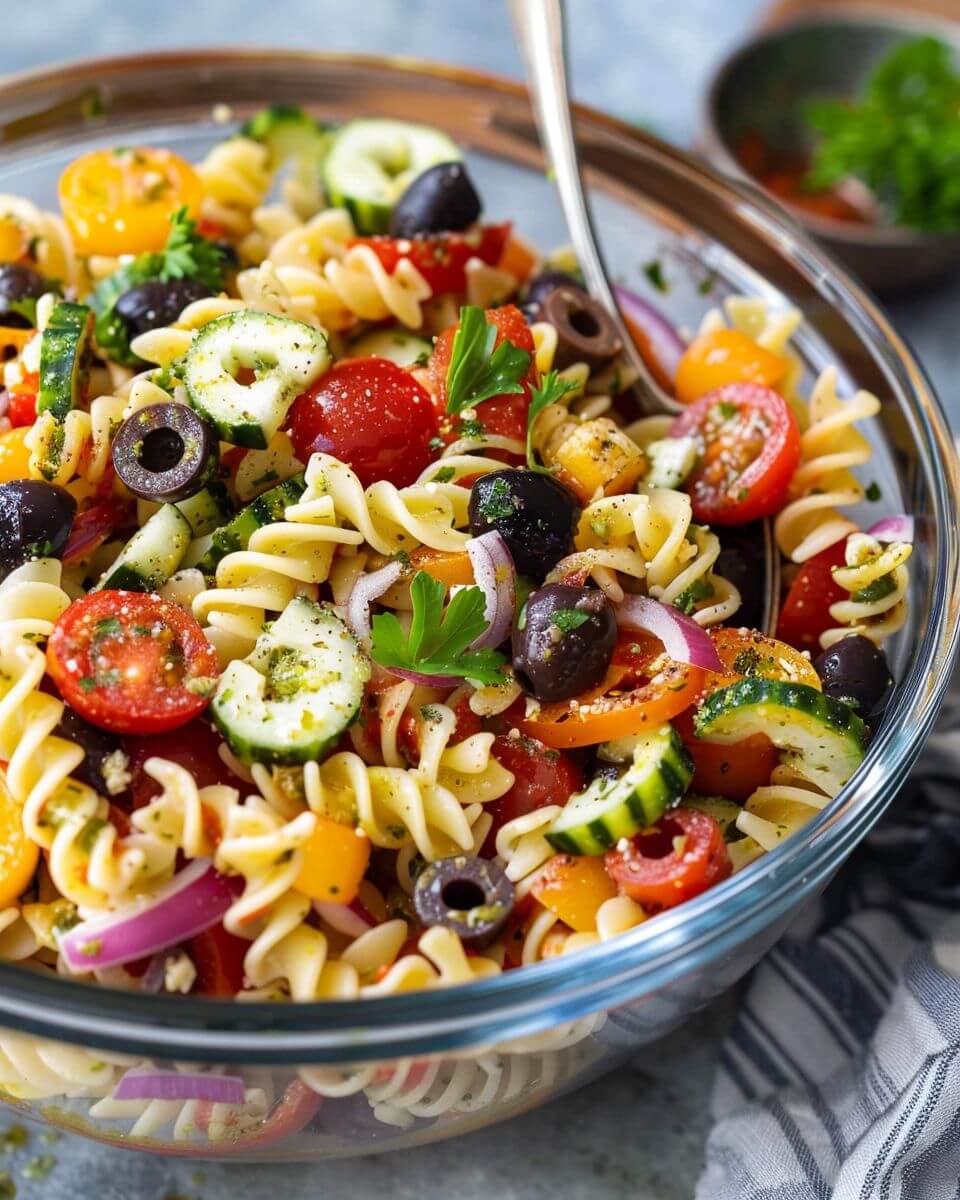
Best Pasta Salad
Best Pasta Salad (Fresh, Flavorful, and Actually Worth Making Again)
Pasta salad has a bit of a reputation problem.
You’ve probably had the kind that’s dry, overly cold, a little bland, maybe sitting in a bowl at a gathering where it’s more of a “filler” than something you’re excited to eat.
But when it’s done right? It’s a completely different story.
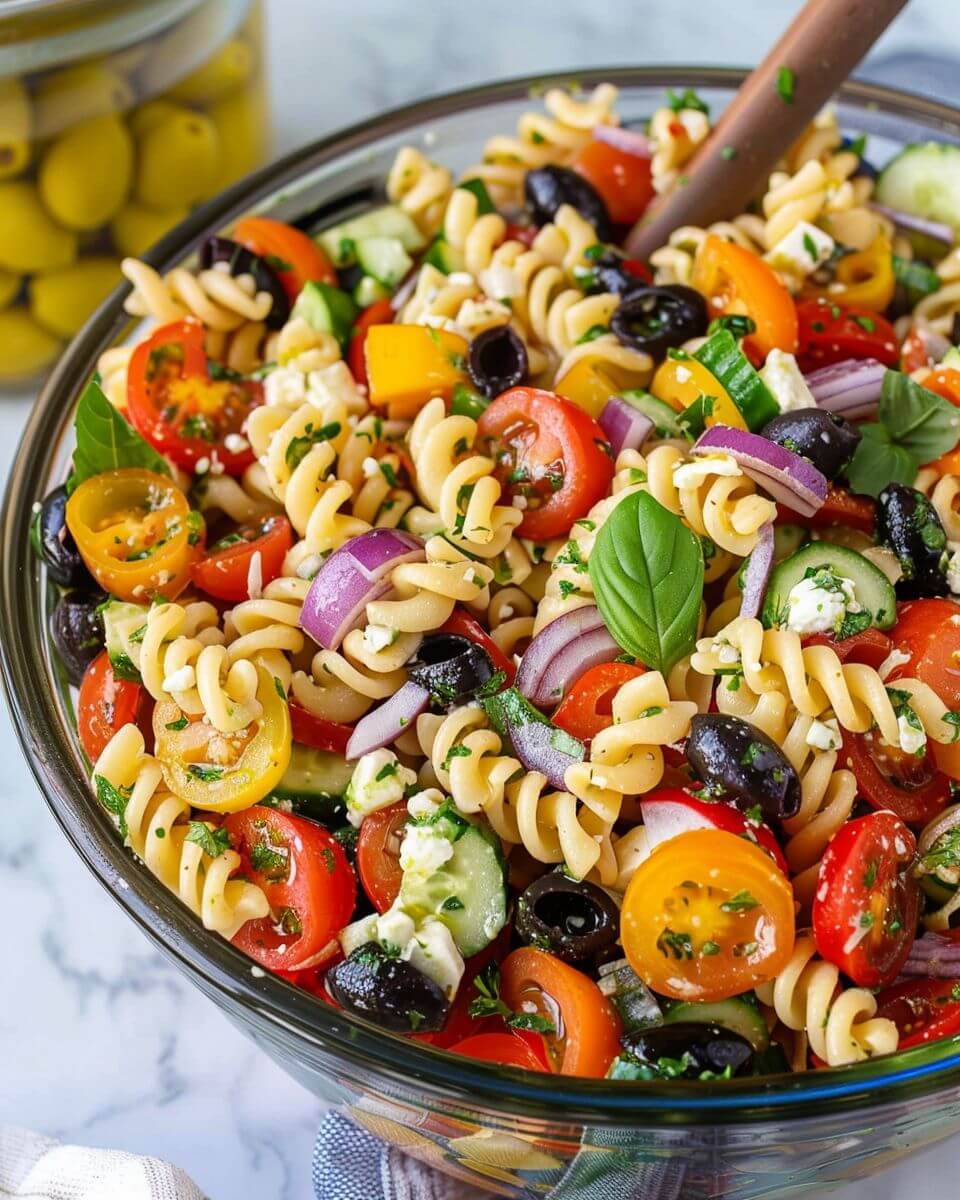
This version—what I’d confidently call the best pasta salad—is bright, flavorful, and layered with texture. It’s not just pasta tossed with dressing. It’s a balance of tender noodles, crisp vegetables, salty bites, and a dressing that actually clings to everything instead of pooling at the bottom.
And maybe the best part? It holds up. It tastes even better after sitting for a bit, which makes it perfect for real life—busy days, make-ahead meals, and those times when you need something reliable in the fridge.
Why This Pasta Salad Works (And Why Others Don’t)
Let’s talk about what usually goes wrong.
Pasta salads can be:
- Under-seasoned
- Overcooked (hello mushy noodles)
- Too oily or too dry
- Missing contrast
This one avoids all of that because it focuses on balance.
You get:
- Tender but firm pasta
- Crunch from fresh veggies
- Saltiness from cheese or olives
- Brightness from vinegar or lemon
- Creaminess (optional, but welcome)
Every bite has something going on. And that’s what makes you want another forkful.
Ingredients (Flexible, Practical, and Easy to Find)
Base:
- 12 oz pasta (rotini, bowtie, or penne work best)
- Salt (for pasta water—don’t skip this)
Vegetables:
- 1 cup cherry tomatoes, halved
- 1 cup cucumber, diced
- ½ cup red onion, finely chopped
- 1 bell pepper, diced
Add-ins:
- ½ cup black olives or green olives
- 1 cup mozzarella pearls or cubed cheese
- ½ cup salami or pepperoni (optional but recommended)
Dressing:
- ⅓ cup olive oil
- 3 tablespoons red wine vinegar
- 1 teaspoon Dijon mustard
- 1 teaspoon Italian seasoning
- 1 garlic clove, minced
- Salt and pepper to taste
Optional:
- Fresh basil or parsley
Ingredient Notes (Because Small Choices Matter)
Use the right pasta shape
Short pasta with ridges or curves holds dressing better. Smooth pasta tends to let everything slide off.
Salt your pasta water well
It should taste like the sea. This is your first layer of seasoning.
Balance your add-ins
Too many soft ingredients = flat texture. You want crunch, chew, and creaminess all working together.
Step-by-Step (With Timing That Actually Helps)
Start by boiling your pasta in well-salted water.
Cook until just al dente—firm to the bite. This matters more than people think. Overcooked pasta turns soft once it sits in dressing.
Drain and rinse briefly under cool water to stop the cooking.
Let it cool slightly.
Prep Everything While Pasta Cools
This is where things come together efficiently.
Chop your vegetables, slice your add-ins, and get everything ready so assembly is quick.
You don’t want to be cutting things while your pasta is sitting too long—it can dry out.
Make the Dressing (Simple but Important)
In a bowl, whisk together:
- Olive oil
- Vinegar
- Dijon mustard
- Garlic
- Italian seasoning
- Salt and pepper
Taste it.
This is key.
It should taste slightly stronger than you expect—because once it’s mixed with pasta, the flavor softens.
Assemble (Layering Matters More Than You Think)
In a large bowl, combine:
- Pasta
- Vegetables
- Add-ins
Pour the dressing over the top.
Toss thoroughly—but gently—so everything gets coated.
If it looks slightly glossy but not soaked, you’re in the right place.
Let It Rest (This Step Changes Everything)
Here’s the part most people skip.
Let the pasta salad sit for at least 30 minutes before serving.
This allows:
- Flavors to blend
- Pasta to absorb dressing
- Everything to settle into a cohesive dish
If you can refrigerate it for a couple of hours? Even better.
Flavor Tips (This Is What Makes It “The Best”)
If you want that extra edge:
Add a splash more vinegar right before serving.
Sprinkle a pinch of salt at the end—it wakes everything up.
Toss again before serving to redistribute dressing.
And don’t be afraid to adjust—it’s meant to be flexible.
Make-Ahead Strategy (This Recipe Loves Time)
This is one of those dishes that actually improves as it sits.
You can:
- Make it the night before
- Store in the fridge for up to 3 days
- Add a small splash of dressing before serving to refresh it
It’s perfect for meal prep or gatherings.
Serving Ideas (It’s More Than a Side)
Yes, it’s a great side dish—but it can easily be more.
Serve it:
- With grilled chicken or fish
- As a light lunch on its own
- At potlucks or gatherings
- Packed for picnics
Or honestly—just straight from the fridge when you need something quick.
A Small Real-Life Note
Some bites will be heavier on cheese.
Some will have more veggies.
Some will be perfectly balanced.
That mix? That’s part of what makes it good.
Why This Recipe Actually Sticks
It’s not complicated.
It doesn’t require special tools or ingredients.
But it works—consistently.
And in a busy household, that matters more than anything.
Conclusion
This pasta salad brings together simple ingredients and thoughtful preparation to create a dish that’s both reliable and genuinely enjoyable. With balanced flavors, varied textures, and a flexible structure, it adapts easily to different preferences and occasions.
Whether you’re preparing it ahead for a busy week or serving it fresh for a gathering, it offers a dependable option that goes beyond the typical expectations of a pasta salad.
And once you’ve made it this way, it’s hard to go back to anything less.
Best Pasta Salad
Ingredients
Method
- Cook pasta in salted water, drain, and let cool slightly.
- Prepare dressing by mixing or shaking all dressing ingredients.
- Combine pasta with all salad ingredients in a large bowl.
- Pour in most of the dressing and toss to coat.
- Chill before serving and add extra dressing if needed.
Notes