LAYERED SALAD IN A CAKE PAN
Layered Salad in a Cake Pan (Fresh, Crunchy, and Built to Impress Without Stress)
You know those dishes that quietly make a comeback?
Not because they’re trendy—but because they just work.
This Layered Salad in a Cake Pan is one of those.
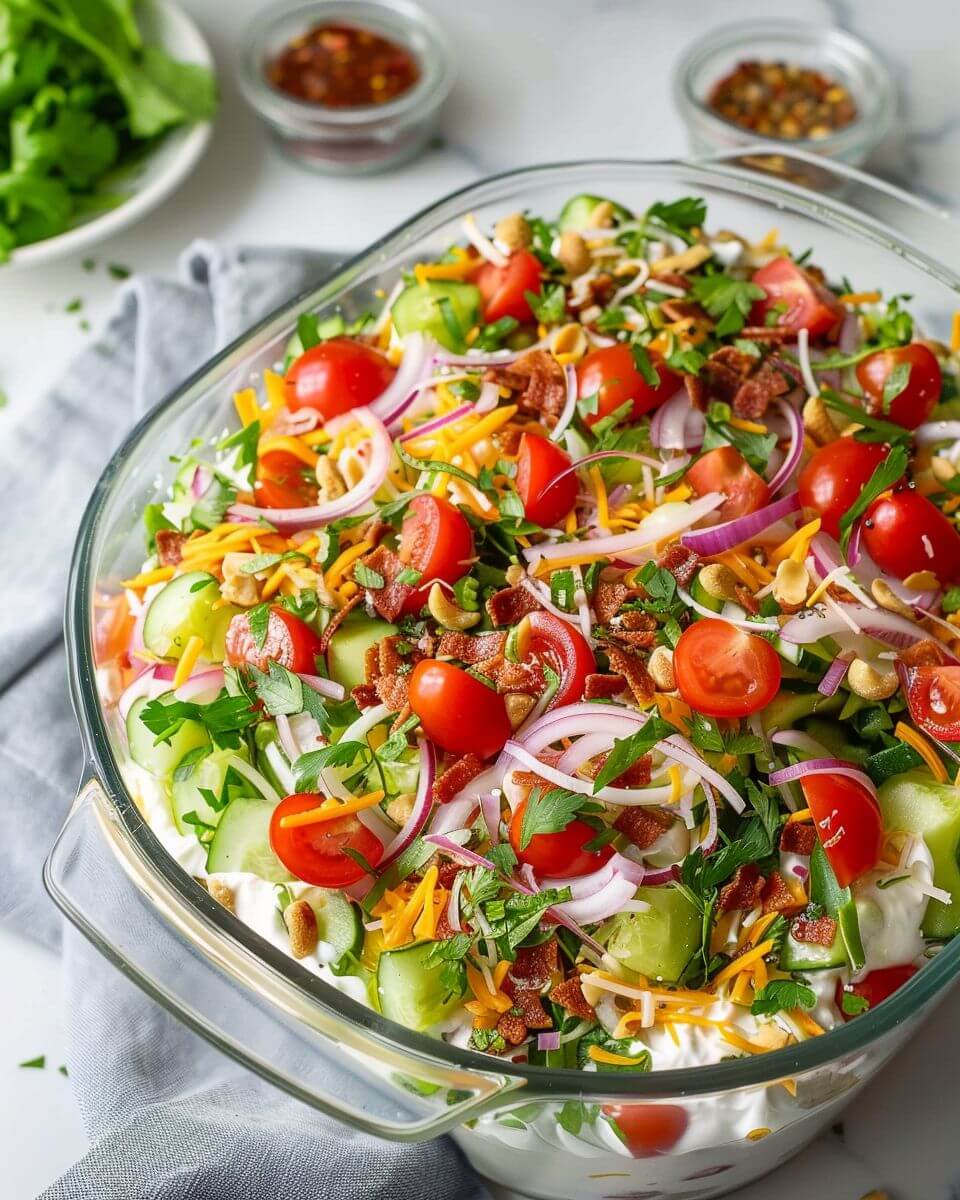
It’s structured, colorful, and surprisingly satisfying. And when you slice into it and lift out a neat, layered square? It feels a little more special than your average tossed salad—without actually being more complicated.
Honestly, it’s one of those recipes that looks like you planned ahead… even if you threw it together between everything else on your list.
And for busy families or gatherings? That’s kind of perfect.
Why This Salad Works (Structure Changes Everything)
Let’s talk about what makes this different.
Most salads are tossed. Everything gets mixed together, which is fine—but it also means textures blend and sometimes get soggy over time.
This one is layered.
And that changes things.
Each ingredient holds its place:
- Crisp lettuce stays crisp
- Juicy vegetables stay contained
- Creamy dressing sits right where it should
- The whole thing slices cleanly instead of collapsing
It’s a small shift, but it makes a big difference—especially if you’re serving a crowd or making it ahead.
Ingredients (Flexible and Buildable)
Here’s a classic base you can follow or adapt:
Base layers:
- 1 head iceberg or romaine lettuce, chopped
- 1 cup cherry tomatoes, halved
- 1 cup cucumber, diced
- ½ cup red onion, finely chopped
- 1 cup shredded carrots
Protein + extras:
- 1 cup cooked chicken, chopped (or turkey/ham)
- ½ cup cooked bacon, crumbled (optional)
- 1 cup frozen peas (thawed)
- 1 cup shredded cheddar cheese
Dressing layer:
- 1 cup mayonnaise
- ½ cup sour cream or Greek yogurt
- 1 tablespoon sugar
- 1–2 teaspoons vinegar or lemon juice
- Salt and pepper to taste
A few helpful notes before you start:
Dry ingredients matter
Make sure veggies are dry—this helps prevent sogginess later.
Iceberg is traditional for a reason
It holds structure and stays crisp longer than softer greens.
Protein is optional but helpful
It turns this into a full meal instead of just a side.
Step-by-Step (Layering That Actually Holds Together)
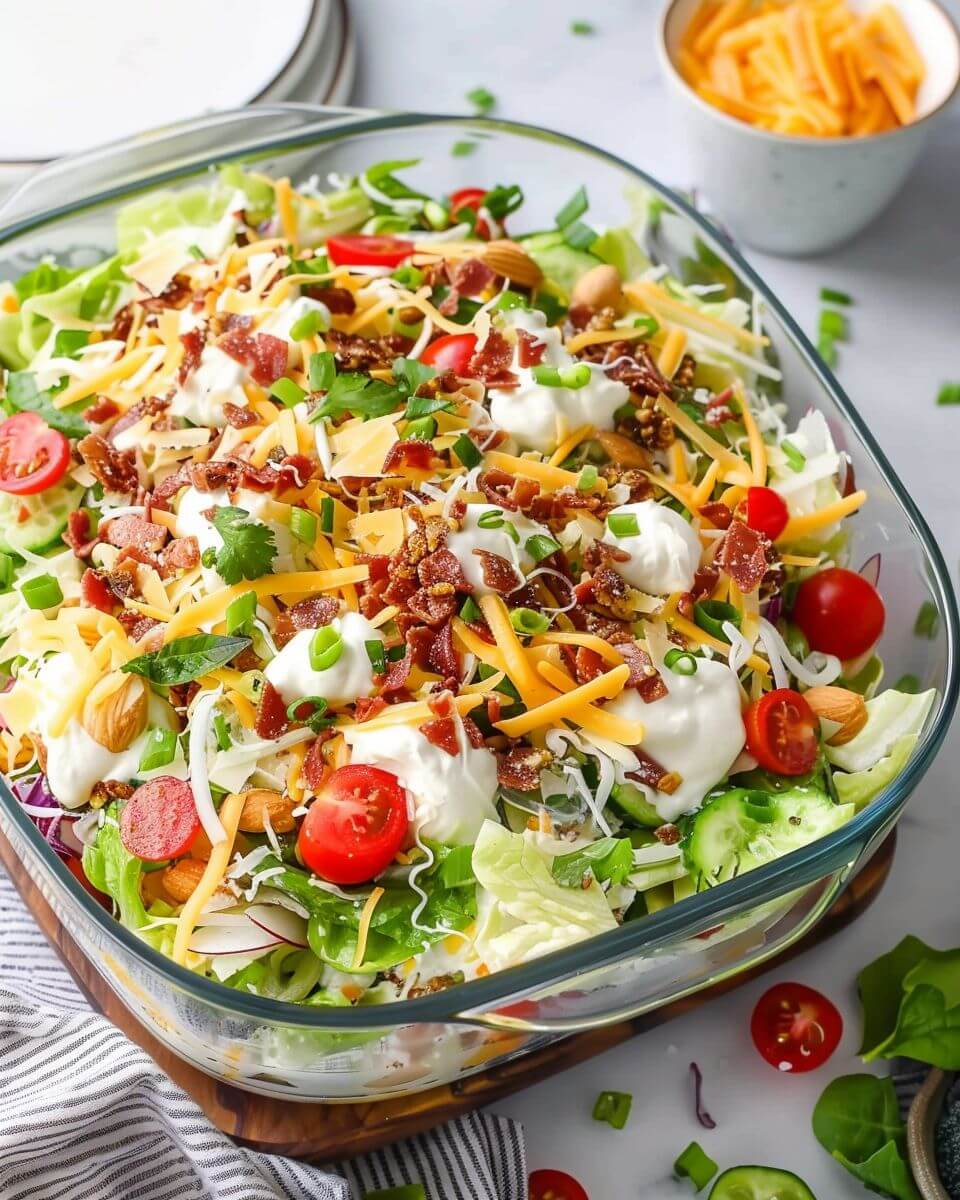
Start with a 9-inch cake pan or similar deep dish.
The shape is what gives you those clean, sliceable portions later.
Layer 1: Lettuce base
Spread your chopped lettuce evenly across the bottom.
Press it down gently—not compacted, just even.
This layer acts as your foundation.
Layer 2: Fresh vegetables
Add tomatoes, cucumbers, carrots, and onion.
Spread each evenly.
Try not to dump everything in one spot—distribution matters here.
Layer 3: Protein + extras
Add your chicken (or other protein), peas, and bacon if using.
Again, even layering helps with slicing later.
Layer 4: Cheese
Sprinkle shredded cheese across the top.
This acts as a barrier between the dressing and the vegetables below.
And that’s actually important.
The Dressing Layer (Seal It In)
In a bowl, mix together mayonnaise, sour cream, sugar, vinegar, salt, and pepper.
Spread this mixture evenly across the top of the salad.
Here’s the key: spread it all the way to the edges.
This creates a seal that helps keep everything underneath fresh and crisp.
Chill (Don’t Skip This Step)
Cover the pan and refrigerate for at least 4 hours—overnight is even better.
This resting time allows:
- Flavors to develop
- Layers to settle
- The structure to firm up for slicing
It’s what turns this from a “bowl of ingredients” into a composed dish.
Slicing and Serving (Where It Pays Off)
When ready to serve, use a large spoon or spatula to scoop down through all the layers.
You can:
- Serve in neat squares
- Scoop layered portions into bowls
- Or gently toss individual servings if preferred
Each serving gets a bit of everything—which is exactly the point.
Texture Tips (So It Stays Crisp and Balanced)
A few small habits make a big difference:
Dry your vegetables well before layering.
Keep dressing thick enough to spread—not runny.
Don’t mix too early—let it sit layered.
Add crunchy toppings (like bacon) closer to serving if you want maximum texture.
Make-Ahead Magic (This Is Where It Really Shines)
This salad is built for planning ahead.
You can:
- Assemble it the night before
- Store it covered in the fridge
- Serve straight from the pan the next day
It actually improves as it sits—something you don’t hear often about salads.
Variations (Make It Your Own)
Once you’ve made it once, you’ll probably start adjusting.
Try:
- Adding avocado (just before serving)
- Swapping in grilled chicken or shrimp
- Using ranch-style dressing instead
- Adding corn or black beans for a Tex-Mex twist
It’s one of those “framework” recipes that adapts easily.
Serving Ideas (More Versatile Than It Looks)
This works for:
- Family dinners
- Potlucks
- Holiday spreads
- Meal prep lunches
You can even portion it into containers for grab-and-go meals.
A Small Real-Life Note
Some layers might shift slightly when serving.
Some pieces will look perfectly stacked, others a bit mixed.
That’s completely fine.
Once it’s on the plate, it still tastes exactly the same—and that’s what matters.
Why This Recipe Sticks Around
It’s not trendy.
It’s not complicated.
But it’s dependable, adaptable, and surprisingly satisfying.
And sometimes, that’s exactly what you need.
Conclusion
This Layered Salad in a Cake Pan offers a practical and visually appealing way to serve a classic combination of fresh ingredients. With its structured layers, make-ahead convenience, and flexible ingredient options, it provides both ease and reliability for a variety of occasions.
Whether you’re preparing it for a family meal or a larger gathering, it delivers consistent results without requiring extra effort at the last minute.
And once it becomes part of your routine, it’s likely to be one of those recipes you return to whenever you need something simple, fresh, and easy to serve.
Layered Salad in a Cake Pan
Ingredients
Method
- Layer half the lettuce in a 9x13 dish.
- Add half of the onion, celery, pepper, mushrooms, and peas.
- Mix mayonnaise with sugar and spread half over the vegetables.
- Top with half the cheese and bacon.
- Repeat all layers once more, ending with bacon.
- Cover tightly and refrigerate 12–24 hours.
- Cut into squares, season, and serve.
Notes