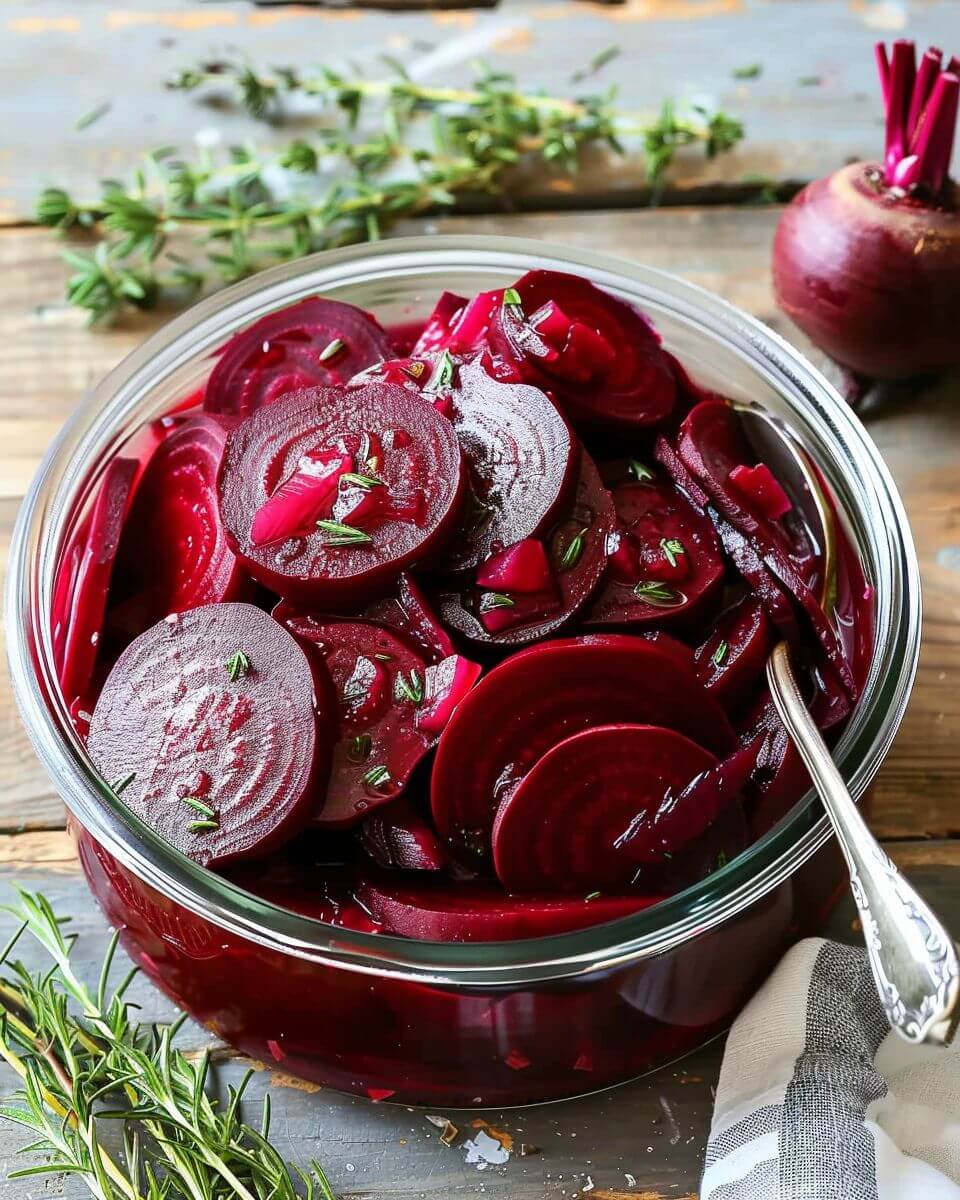
Pickled Beets
Pickled Beets (Sweet, Tangy, Jewel-Toned Goodness That Gets Better by the Day)
Pickled beets are one of those recipes people tend to have strong feelings about.
Some grew up loving them—cold from the fridge, tucked next to supper on a little dish. Others remember them from old-fashioned salad bars and haven’t thought about them since.
And honestly? Homemade pickled beets are a completely different thing.
They’re brighter. Fresher. More balanced.
Not harshly vinegary. Not syrupy sweet.
Just earthy roasted beet flavor wrapped in a gently tangy brine with enough sweetness to soften the edges.
And there’s something satisfying about making them yourself. Maybe it’s those jewel-colored slices glowing in a jar. Maybe it’s how something so simple feels oddly special. Or maybe it’s that quiet kitchen magic when ordinary vegetables turn into something you keep finding excuses to eat.
Because you will.
On salads. On sandwiches. Straight from the jar at the fridge door. It happens.
Why Homemade Pickled Beets Are Worth It
Store-bought pickled beets can be fine.
But often they lean too sweet, too acidic, or a little one-note.
Homemade lets you control all of that.
You get:
- Earthy sweetness from the beets themselves
- Bright tang from vinegar
- A balanced brine you can tailor to your taste
- Tender slices that still have texture
And unlike some projects that feel like work, this one is surprisingly low-fuss.
Boil. Slice. Simmer brine. Pour. Chill.
That’s basically it.
And somehow the result feels much fancier than the process suggests.
Ingredients (Simple Pantry Staples, Big Flavor)
- 2 pounds fresh beets
- 1 cup white vinegar or apple cider vinegar
- ½ cup water
- ⅓ to ½ cup sugar (adjust to taste)
- 1 teaspoon salt
- 4 whole cloves (optional but classic)
- 4 peppercorns (optional)
- 1 small cinnamon stick (optional for warmth)
- 1 small sliced onion (optional and wonderful)
A few helpful notes before you start:
Choose similar-sized beets
They cook more evenly that way.
Apple cider vinegar gives a softer tang
White vinegar tastes brighter and sharper.
Don’t skip the salt
It doesn’t make them salty—it balances everything.
Whole spices add depth quietly
Not mandatory, but lovely.
Step One: Cook the Beets
Start by washing the beets well, but leave the skins on for cooking.
That helps preserve flavor and color.
Place them in a pot, cover with water, and simmer until fork tender—usually 30–45 minutes depending on size.
And yes, your kitchen may look like a purple art project at some point.
That’s normal.
Once tender, drain and let them cool enough to handle.
Then rub or peel the skins off—they should slip off easily.
Honestly, this part is oddly satisfying.
Slice Them (Or Wedge Them—No Rules Here)
Once peeled, slice the beets into rounds.
Or wedges.
Or chunks.
There’s no beet police.
Thin slices absorb brine faster.
Thicker pieces stay a little firmer.
Both are good—just different.
If using onion, slice it thinly now too.
Make the Brine (This Is Where the Flavor Happens)
In a saucepan combine:
- Vinegar
- Water
- Sugar
- Salt
- Spices if using
Bring it to a gentle simmer, stirring until sugar dissolves.
Taste it.
And do taste it.
This is where you decide:
More tang? Add a splash more vinegar.
Sweeter? A touch more sugar.
A recipe can guide you, but your palate should finish the job.
That’s the difference between following a recipe and making one yours.
Pack the Jars
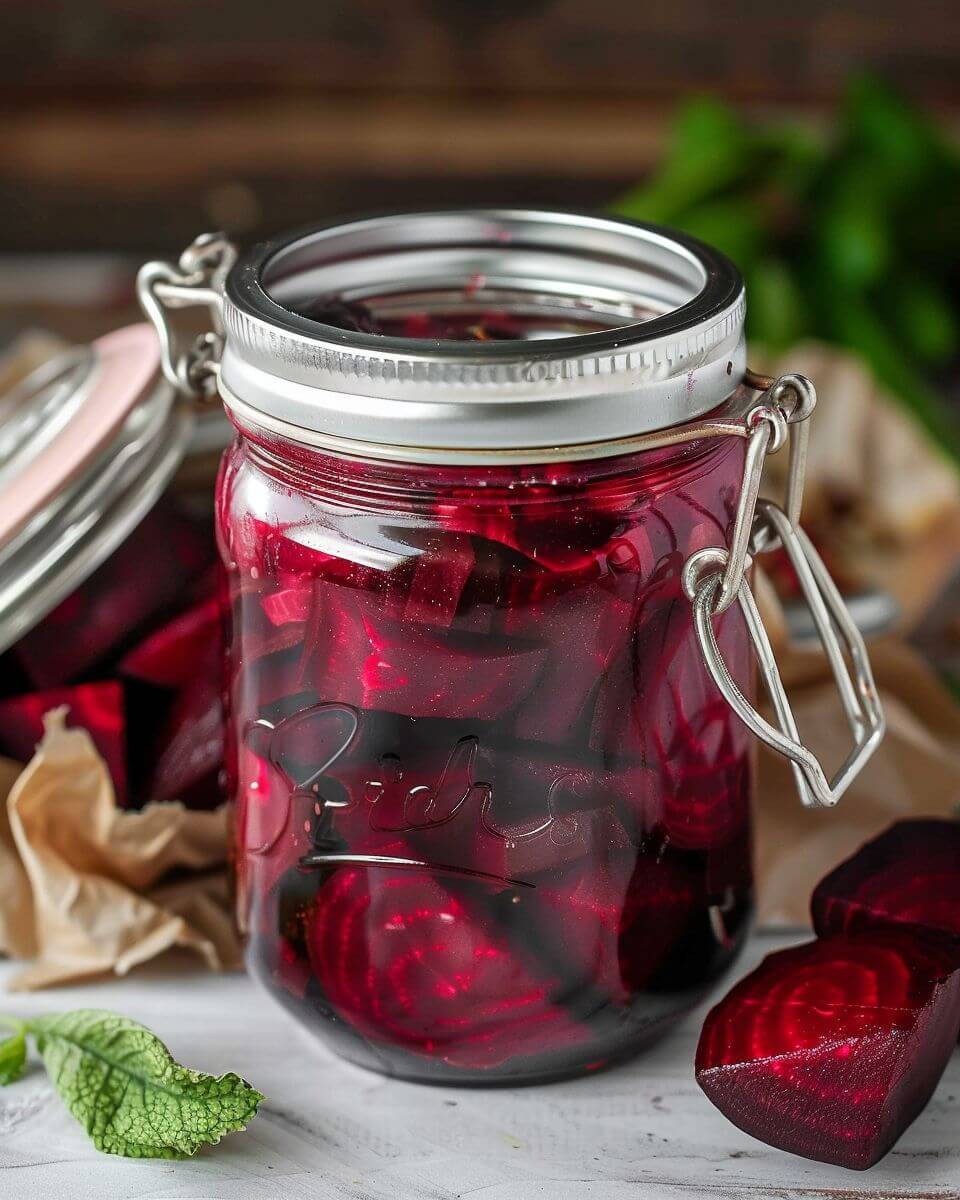
Place sliced beets (and onions if using) into clean jars or containers.
Pour the warm brine over everything until covered.
Make sure spices distribute somewhat evenly.
And take a second to appreciate the color.
Really.
It’s gorgeous.
Like stained glass in a mason jar.
Chill and Wait (The Hardest Part)
Cover and refrigerate.
They’ll be good after a few hours.
Better after a day.
Possibly best after two or three.
This is one of those recipes where patience actually pays off.
The flavors mellow, deepen, settle.
It becomes more than vinegar-on-beets.
It becomes pickled beets.
There’s a difference.
Texture Tips (Because Mushy Beets Are Sad)
A few things help keep them just right:
Don’t overcook the beets.
Tender is good.
Falling apart is not.
Slice consistently so they pickle evenly.
And don’t drown them in too much sugar—that can mute the natural beet flavor.
You want the beets to taste like beets… just brighter.
Easy Flavor Variations (Once You Start Playing)
Here’s where things get fun.
Try adding:
- Orange peel for citrus warmth
- Mustard seeds for a little bite
- Fresh dill for a savory twist
- Star anise for subtle depth
- A little honey instead of some sugar
Even a bay leaf changes things.
And once you start experimenting, it’s hard not to keep tinkering.
Make-Ahead Magic (This Recipe Loves Planning)
This is one of those rare dishes improved by advance prep.
Make them days ahead.
Even a week.
They just get better.
Stored in the refrigerator, they keep well for weeks.
Which means you can have something bright and flavorful ready anytime.
That feels luxurious somehow.
Prepared food that waits patiently for you.
How to Serve Pickled Beets (Beyond the Side Dish You Remember)
This is where people underestimate them.
Yes, they’re lovely beside dinner.
But also:
Serve them with goat cheese on salad.
Layer them on sandwiches.
Add to grain bowls.
Tuck beside roasted meats.
Chop into potato salad.
Serve with hard-boiled eggs.
Pair with walnuts and greens.
Honestly, they wake up almost anything.
And if you’ve never had pickled beets with creamy cheese and crusty bread…
That might be worth fixing.
A Small Real-Life Note
Your fingers may turn pink.
Your cutting board may too.
Someone in the family may insist they “don’t like beets” and then keep eating these.
That happens more than you’d think.
Why Recipes Like This Endure
Because they’re practical.
Beautiful.
Frugal.
And oddly comforting.
There’s something grounding about preserving something simple.
Especially now, when so much cooking can feel rushed.
This slows you down in a good way.
And rewards you later.
That’s a lovely kind of recipe.
A Little Serving Thought for Holidays
Pickled beets on a holiday table are underrated.
They cut richness.
They add color.
They bring brightness when everything else leans heavy and creamy.
Sometimes the quiet dishes do the most work.
This is one of them.
Conclusion
Pickled Beets prove that humble ingredients can become something unexpectedly special with just a little time and a simple brine. They’re vibrant, versatile, and deeply rewarding in a way that far exceeds the effort involved.
Whether you grew up eating them or you’re discovering them fresh, homemade pickled beets offer a balance of sweetness, tang, and earthy depth that store-bought versions rarely match.
And once a jar is sitting in your fridge, you’ll likely find yourself reaching for them far more often than you ever expected.
Pickled Beets
Ingredients
Method
- Place beets in a large stockpot and cover with water. Bring to a boil and cook until tender, about 15 minutes depending on size. Drain, reserving 2 cups beet water. Cool, peel, and quarter larger beets if needed.
- Sterilize jars and lids in boiling water for at least 10 minutes. Pack jars with beets and add several whole cloves to each jar.
- In a large saucepan, combine sugar, reserved beet water, vinegar, and pickling salt. Bring to a rapid boil.
- Pour hot brine over beets in jars, leaving proper headspace, and seal with lids.
- Place jars on a rack in a large stockpot half-filled with water. Add more boiling water until jars are covered by at least 1 inch.
- Bring water to a full boil, cover, and process jars for 10 minutes. Remove carefully and cool completely before storing.
Notes