German Potato Pancakes
German Potato Pancakes (Golden, Crispy Comfort You’ll Want on Repeat)
Some recipes don’t need reinventing.
They survive decades—sometimes centuries—because they simply work.
German Potato Pancakes are one of those recipes.
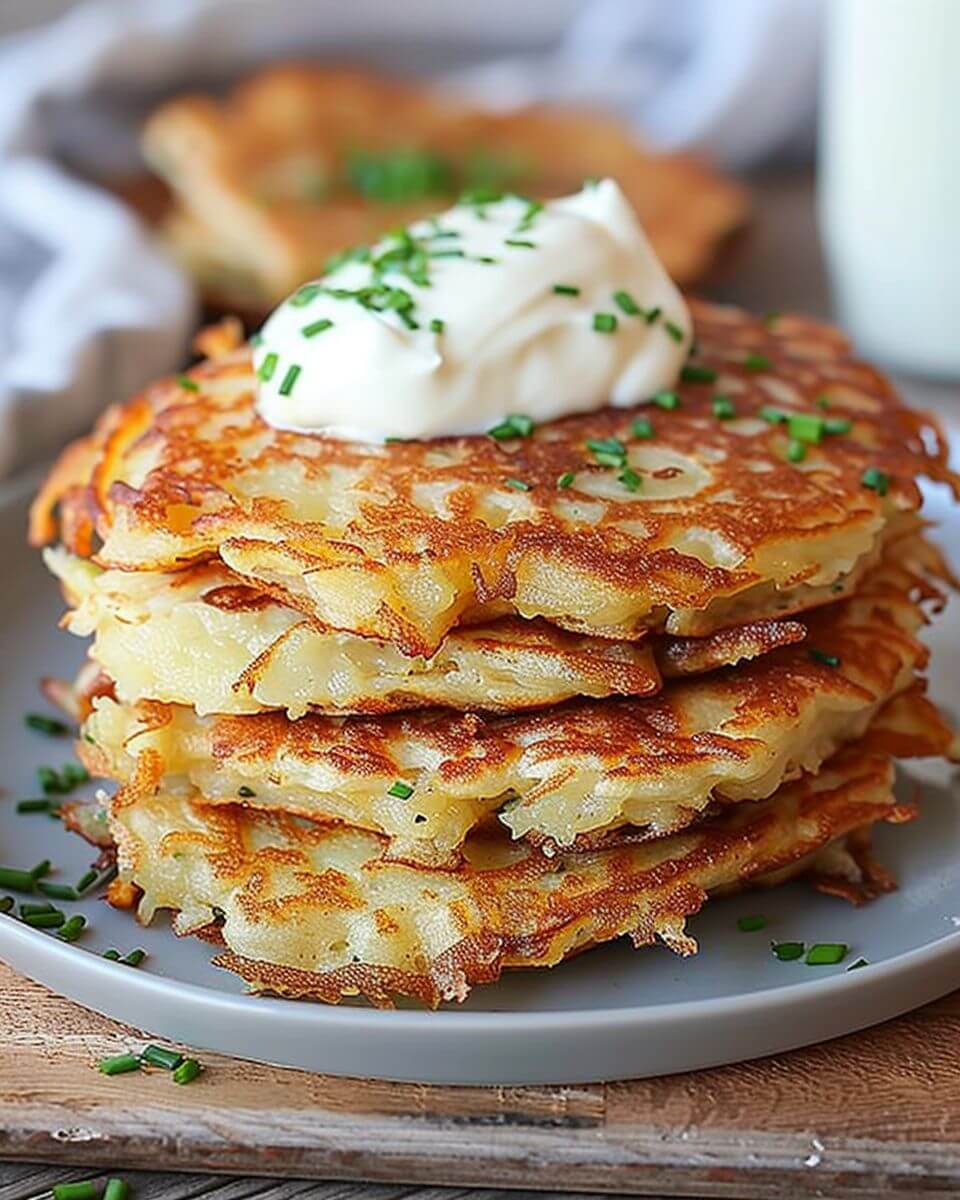
Crispy at the edges, tender in the center, deeply savory but somehow equally wonderful with applesauce or sour cream… they sit in that beautiful category of humble food that tastes far greater than the sum of its ingredients.
Potatoes. Onion. Eggs. Flour.
That’s mostly it.
And somehow, with a hot skillet and the right touch, those simple ingredients become something irresistible.
If you’ve never made them from scratch, they may sound a little like hash browns in pancake form. But they’re their own thing entirely—richer in flavor, more delicate in texture, and somehow cozy in a way that feels old-world and timeless.
And honestly? They’re the kind of food that makes a kitchen feel like home.
Why These Work (And Why People Love Them So Much)
Let’s start with what makes these special.
It’s texture.
That contrast is everything.
You get:
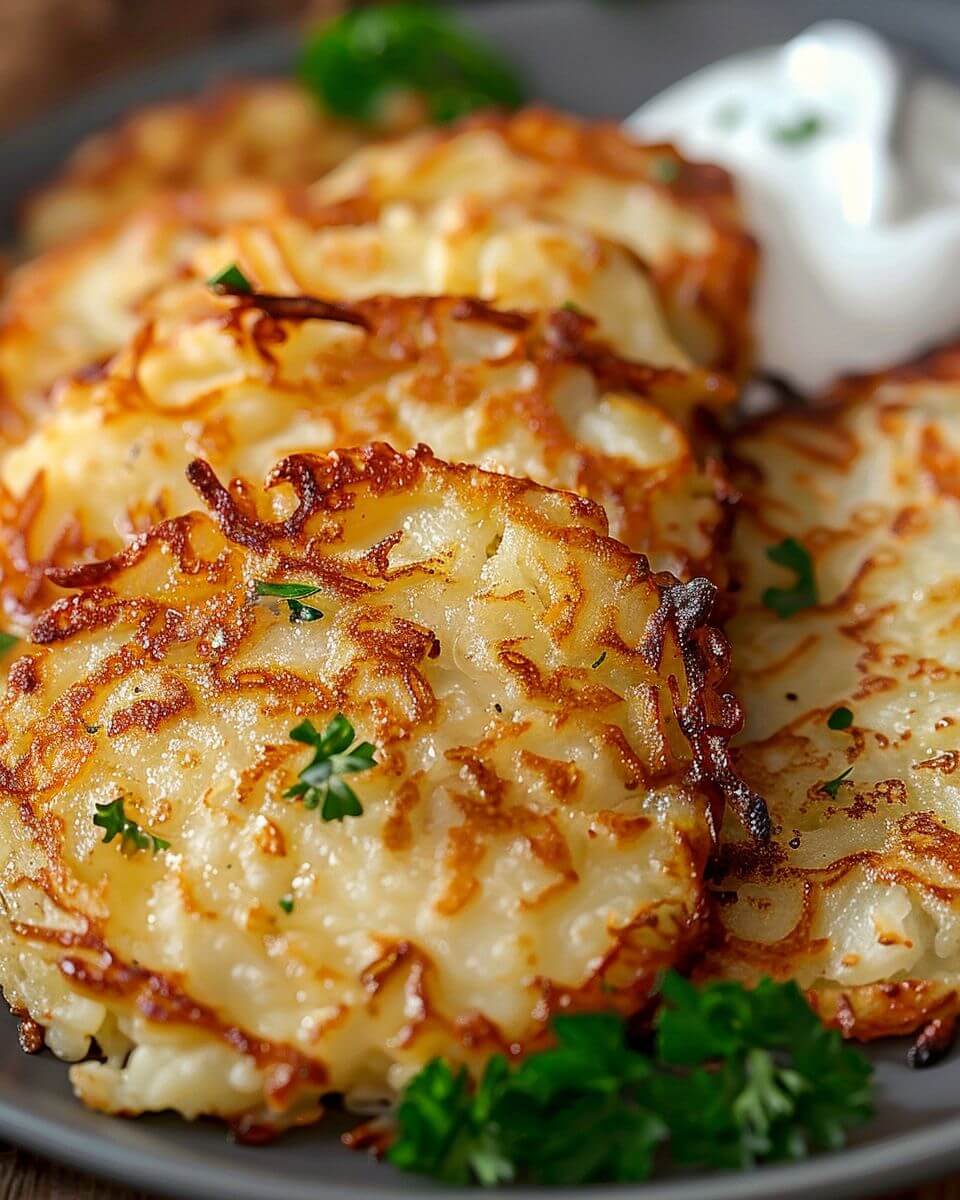
- Deeply golden, crackly edges
- Soft, almost creamy potato centers
- A little sweetness from onion
- A salty, savory finish that makes them hard to stop eating
And unlike some fried foods that feel heavy, these somehow feel hearty without weighing you down.
Maybe it’s because potatoes have a kind of honest simplicity.
Or maybe it’s because food crisped in a skillet always has a way of winning people over.
Either way—these disappear fast.
Ingredients (Simple Pantry Staples, Nothing Fancy)
Traditional German potato pancakes—often called Kartoffelpuffer—don’t ask much.
You’ll need:
- 4 medium russet potatoes
- 1 small yellow onion
- 2 large eggs
- ¼ cup all-purpose flour
- 1 teaspoon salt
- ½ teaspoon black pepper
- Neutral oil for frying (like vegetable or canola)
Optional for serving:
- Applesauce
- Sour cream
- Fresh chives
- Smoked salmon if you want a brunch moment
A Few Ingredient Notes That Matter
Russet potatoes work beautifully
They have enough starch to help hold things together and crisp well.
Onion isn’t just flavor—it adds moisture
And somehow makes them taste more “complete.”
Don’t skip seasoning
Potatoes need salt. More than people think.
Simple ingredients mean every one of them matters.
Step One: Grate Everything (And Yes, This Is Worth Doing Fresh)
Peel the potatoes.
Grate them using the large holes of a box grater or a food processor.
Grate the onion too.
Now—it won’t look glamorous.
That’s normal.
At this stage it looks like the beginning of something very questionable.
Stay with it.
The Most Important Step Nobody Should Skip
Squeeze out the moisture.
Seriously.
This is the difference between crisp potato pancakes and sad soggy ones.
Place the grated potato and onion mixture in a clean kitchen towel.
Twist and squeeze.
Then squeeze again.
You’ll be amazed how much liquid comes out.
And yes—it matters that much.
Removing moisture lets the pancakes crisp instead of steam.
And crisp is the goal.
Always crisp.
Make the Batter
Transfer your squeezed potato mixture to a bowl.
Add:
- Eggs
- Flour
- Salt
- Pepper
Mix everything until combined.
It should hold together loosely—not be runny.
If it seems too wet, add a touch more flour.
But don’t overdo it.
Too much flour can make them dense.
You want potato-forward, not doughy.
Frying (Where the Magic Happens)
Heat a thin layer of oil in a skillet over medium heat.
Not screaming hot.
Not timid.
Medium.
Scoop a portion into the skillet and flatten lightly with the back of a spoon.
Don’t make them too thick.
Thinner pancakes crisp better.
Cook until deep golden brown—about 3–4 minutes per side.
Flip carefully.
Admire the crust.
Try not to eat one immediately over the stove.
(Though… understandable.)
Texture Secrets for Truly Great Potato Pancakes
This is where good becomes great.
A few little things matter:
1. Don’t overcrowd the pan
Too many pancakes lower the oil temperature.
Then they steam.
We don’t want that.
2. Let them get properly golden
Don’t flip too early.
That crust needs time.
3. Drain on a wire rack if possible
Paper towels work, but a rack keeps them crispier.
Small thing. Big difference.
They Should Sound Crisp
This might sound odd, but listen.
When you set one down, there should almost be a faint crisp “tap.”
That’s how you know.
That’s the sound of success.
Sweet or Savory? The Great Debate
Here’s where people get passionate.
Some serve these with sour cream and chives.
Others insist applesauce is the only right answer.
And honestly?
Both are right.
Savory version:
- Sour cream
- Chives
- Smoked salmon
- Even a fried egg on top
Sweet version:
- Applesauce
- Cinnamon sugar
- A drizzle of honey
It depends on mood.
And maybe childhood memory.
Make-Ahead Tips (Because Real Life Happens)
These are best fresh.
But they reheat surprisingly well.
Place cooked pancakes on a baking sheet and warm in a hot oven until crisp again.
Avoid the microwave.
The microwave steals the crunch.
And the crunch is half the point.
You can also keep batches warm in a low oven while frying the rest.
Very useful if feeding people.
Especially hungry people hovering in your kitchen.
Why They Feel So Comforting
There’s something grounding about food like this.
Maybe because it comes from making something wonderful out of basic ingredients.
No expensive cheese.
No elaborate sauces.
Just potatoes transformed by technique.
And honestly?
That kind of cooking always feels satisfying.
A Few Easy Variations
Once you’ve made the classic version, you can play.
Add:
- Grated zucchini (well-drained)
- Fresh herbs
- A little shredded cheddar
- Garlic for extra savoriness
But truly?
The classic is hard to improve.
Sometimes tradition knows what it’s doing.
A Small Real-Life Note
Some pancakes will be perfectly round.
Some will look gloriously rustic.
Some edges will get extra dark and crispy.
Those are usually the best ones.
The imperfect ones often are.
Serving Ideas Beyond the Side Dish
These don’t have to stay a side.
Serve them:
- With soup for a cozy meal
- As brunch with eggs
- As an appetizer topped with sour cream and herbs
- Alongside roast chicken
- Even as a late-night snack standing at the stove
No judgment.
Honestly, maybe that’s the best way.
Why These Stay in Family Recipe Boxes
Because they’re simple.
Reliable.
Comforting.
And people remember them.
Recipes like this don’t survive generations by accident.
They stay because they deserve to.
Conclusion
German Potato Pancakes prove that humble ingredients can create something deeply satisfying when treated with care. With their crisp edges, tender centers, and endless serving possibilities, they offer a beautiful mix of comfort and versatility.
They work as breakfast, dinner, side dish, or snack. They welcome both sweet and savory toppings. They’re rustic, forgiving, and wonderfully rewarding.
And once you make them from scratch—really crisp, golden, homemade ones—it’s hard to go back.
Because food this simple has a way of becoming tradition.
German Potato Pancakes
Ingredients
Method
- In a large bowl, combine shredded potatoes, green onions, flour, egg, salt, and pepper until well mixed.
- Heat oil in a large skillet over medium-high heat until hot.
- Drop batter by 1/4 cup portions into skillet and flatten gently with a spatula.
- Fry until golden brown and crisp on one side, then flip and cook the second side until browned and cooked through.
- Transfer to a paper towel-lined plate and repeat with remaining batter. Serve warm.
Notes